The Machine Built for the River of Grass
The first time you see an airboat resting at the edge of the Everglades, it looks almost improbable. A flat hull. A towering propeller. No visible rudder cutting through water. It feels more like an aircraft waiting for a runway than a boat preparing for a marsh.
Yet in South Florida’s Everglades, the airboat is not unusual at all. It is essential.
The Everglades is not a traditional body of water. It is a slow moving sheet of shallow water flowing across limestone and sawgrass. Depth can shift from inches to barely a foot. Vegetation spreads thick across the surface. Traditional boats with submerged propellers would strike bottom constantly. Jet drives would clog. Keels would drag.
The airboat solves that problem through design. At Ride The Wind, every private charter depends on that engineering.
The Flat Hull That Makes It Possible
The foundation of any airboat is its flat bottom hull. Unlike deep V hulls designed to cut through waves, an airboat hull spreads its weight evenly across shallow water. This wide surface area allows the boat to plane quickly and skim across areas that would stop other vessels instantly.
In the Everglades, that design is not a luxury. It is survival. Much of the terrain consists of marl flats and submerged grass beds. A deeper draft boat would sink into vegetation and sediment. The flat hull distributes pressure and reduces friction against the marsh surface.
This is why an airboat can glide across water that appears barely deep enough to cover your boots. It is not magic. It is balance and surface distribution.
At Ride The Wind, maintaining hull condition is part of daily operations. Even small imperfections can affect performance in shallow water. Care and inspection are part of what makes a private airboat tour feel smooth and controlled.
Elevated Propulsion and the Power of Air
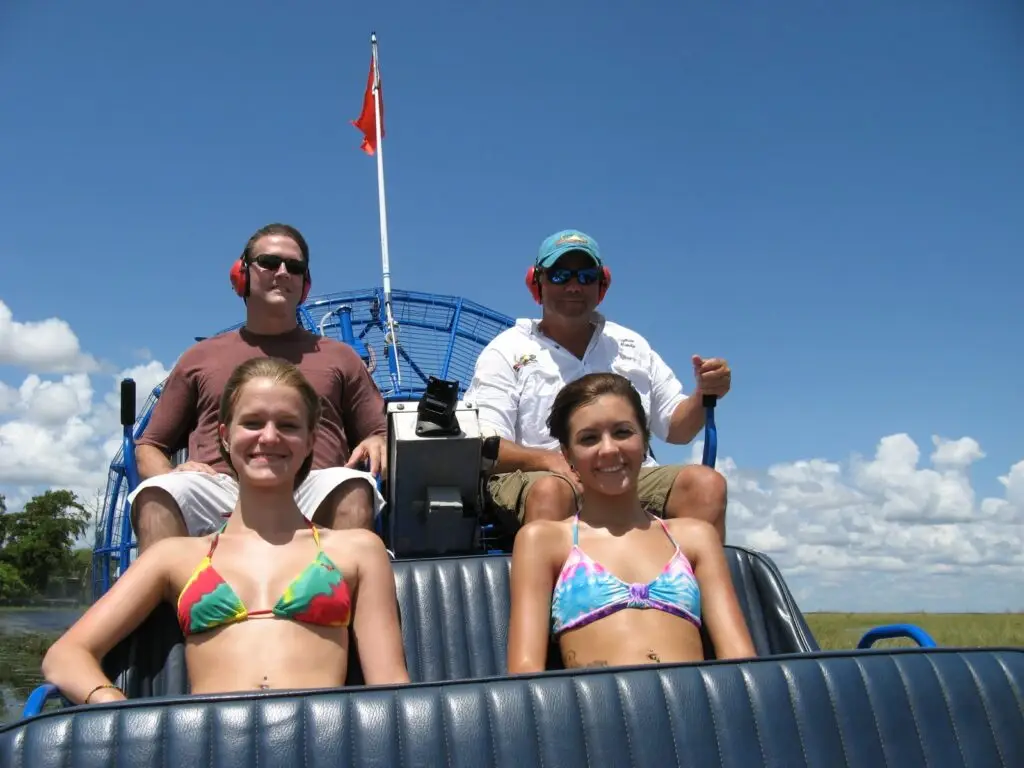
The most distinctive feature of an airboat is the large propeller mounted above the hull. Unlike traditional boats, propulsion does not come from pushing water backward through a submerged propeller. It comes from pushing air.
That difference changes everything.
Because the propeller never touches the water, it cannot strike submerged limestone or vegetation. It eliminates the risk of underwater prop damage. It also prevents churning up sediment, which protects fragile plant life beneath the surface.
In shallow Everglades terrain, this elevated thrust system allows uninterrupted movement across areas where even a few inches of water would disable conventional boats.
The physics are simple but powerful. Thrust generated above the waterline pushes the hull forward while the flat bottom keeps it riding high. Steering comes from directional airflow and hull angle rather than a submerged rudder.
If you are curious how these private rides are customized to take advantage of this unique design, the Ride The Wind services page provides a detailed overview.
Steering Without a Rudder
One of the most misunderstood aspects of airboat design is steering. Visitors often expect to see a rudder beneath the waterline. There is none.
Steering is controlled by rudders mounted behind the propeller, directing airflow rather than water flow. When the captain adjusts the controls, the direction of thrust shifts, guiding the boat left or right.
This means control depends on airflow management and balance. In shallow marsh conditions, this system allows responsive navigation without disturbing underwater terrain.
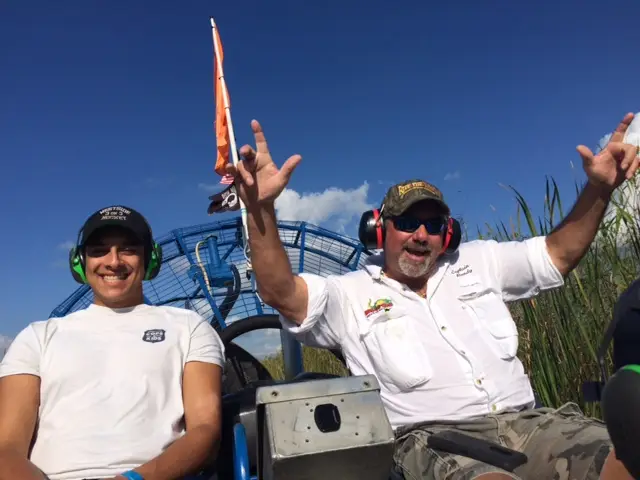
Captain Randy’s experience becomes essential here. Reading wind direction, anticipating drift, and adjusting throttle require constant attention. Airboat operation is active, not passive. It demands engagement from start to finish.
Designed for an Ecosystem, Not Against It
The Everglades is often described as a fragile ecosystem. Responsible travel through it requires equipment that minimizes disruption.
Because the airboat has no submerged drive components, it reduces damage to vegetation compared to prop driven boats. It allows operators to navigate shallow prairies without digging into the substrate.
Organizations such as the National Park Service explain the importance of protecting the River of Grass and its shallow water systems
Responsible operators understand that design matters. At Ride The Wind, routes are selected not just for excitement but for environmental awareness. The design of the airboat supports that approach.
Stability in Changing Conditions
South Florida weather shifts quickly. Wind can build across open prairies. Water levels fluctuate after heavy rain. The airboat’s lightweight structure and broad base provide stability even when conditions change.
Because the hull rides above rather than through water, it is less vulnerable to sudden depth variations. That flexibility allows private tours to adjust routes in real time.
For visitors, this translates into confidence. The ride feels adventurous but controlled. The design handles conditions that would leave traditional boats grounded.
Why Shallow Water Demands This Design
The Everglades averages only a few inches to a few feet deep across large expanses. In dry seasons, water can recede further. A boat with even modest draft would struggle.
Airboat design was not created randomly. It evolved specifically for environments like this. From early adaptations in Florida to modern refined hulls, the focus has always been shallow water efficiency.
The Everglades Foundation highlights how water flow shapes the region’s future and why understanding this environment is critical.
The airboat remains one of the few vessels capable of traversing these waters consistently without extensive infrastructure.
Private Design Advantage

Group tour boats often follow fixed paths. Private airboat charters allow full use of the design’s flexibility. Routes can shift based on water clarity, wildlife movement, and guest interest.
This freedom is what makes a Ride The Wind charter feel different. The design allows exploration of narrow cuts and open prairies without limitation.
For scheduling and personalized route planning, visitors can connect directly through the Ride The Wind contact page.
Engineering Meets Experience
While airboat design is mechanical in nature, its purpose is experiential. The flat hull allows access. The elevated propeller allows continuity. The airflow steering allows precision.
Together, these elements create the feeling of gliding across water rather than fighting against it.
The Everglades is not a lake to cross. It is a landscape to move with. Airboat design makes that possible.
When you ride with Ride The Wind, you are not simply boarding a vessel. You are stepping into a machine built specifically for this environment, guided by a captain who understands both its mechanics and the marsh beneath it. Contact us today for your next private airboat tour.
That is why the airboat works here. Not by chance. By design.